
Even a developer with six years of practical engineering experience can find it challenging to explain why a particular architecture was chosen when interviewed. Past marketing achievements does not guarantee that a candidate will remember the right performance numbers when questioned.
These examples do not necessarily indicate weak qualifications. Interviews require candidates to draw on their knowledge, structure their ideas, interpret unfamiliar questions, and communicate clearly under pressure.
AI technology offers additional tools for developing these interview skills. Through preparation tailored to the candidate, simulated interviews, and live response suggestions, Interview Pilot aims to help job seekers feel more confident in professional interviews.
Build a Useful Collection of Professional Experiences
Many candidates prepare in the conventional way by collecting typical interview prompts and learning sample answers by heart. The drawback of memorized generic answers is that they rarely describe the candidate’s genuine professional experience.
An interviewer might ask, “Tell me about a time you managed a difficult project.” Starting confidently is useful, but the answer needs meaningful detail. The candidate should describe what was happening, clarify their own role, explain their choices, and report the result.
Suggestions from Interview Pilot draw on the applicant’s resume, the role being pursued, and the potential employer.
An AI interview assistant can support preparation by helping applicants decide which experiences to discuss, structure the relevant information, and identify weaknesses in their explanations. Candidates can then practice explaining those examples faithfully in their own words.
Articulating Technical Expertise in an Interview
An assessment of technical ability goes beyond knowing programming languages, software platforms, and engineering principles. Hiring teams often examine how an applicant reasons through a challenge and compares possible solutions.
When discussing database optimization, a developer may be asked to describe how indexing improved query performance, the associated trade-offs, and the method used to measure the improvement.
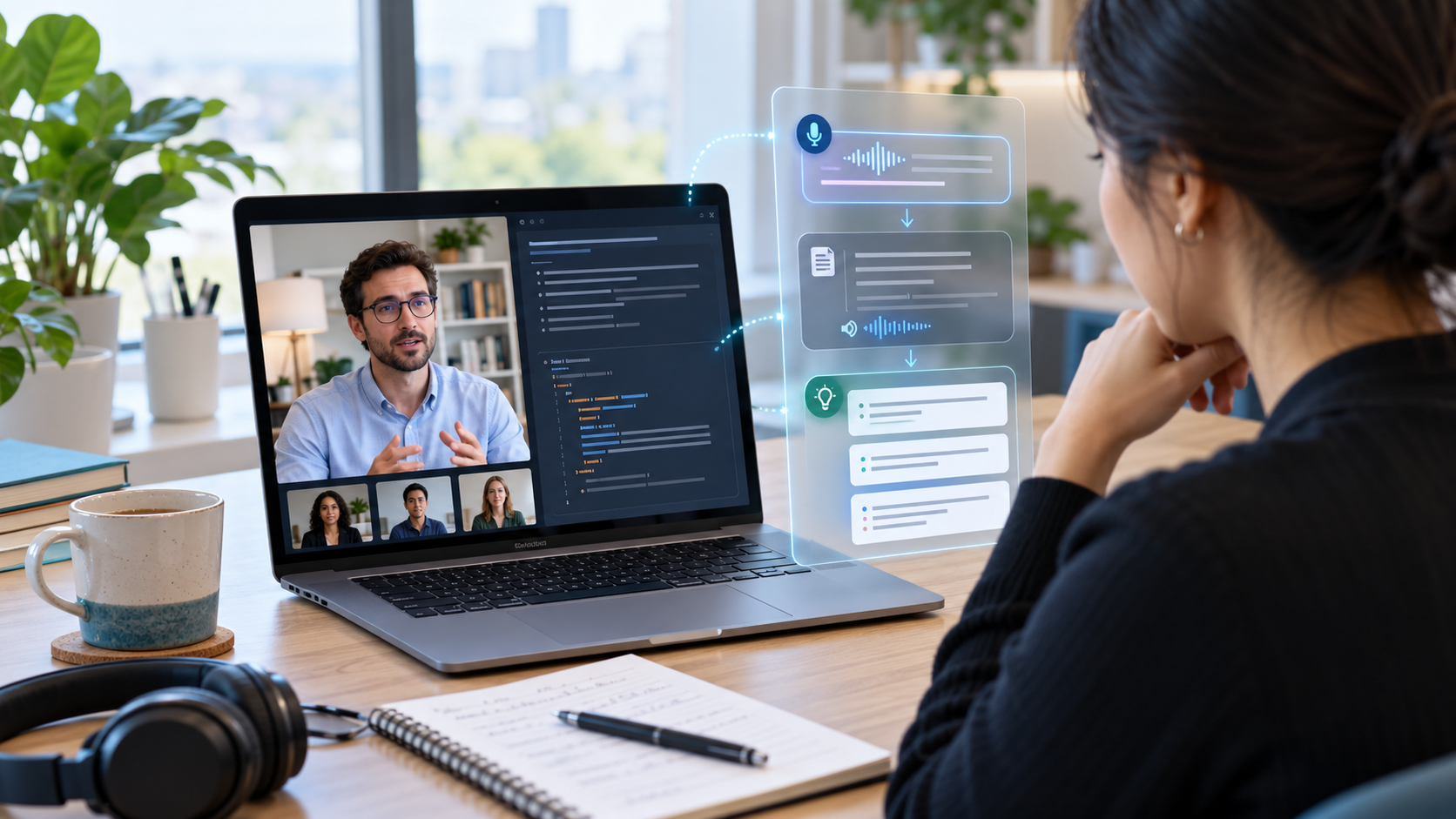
Interview Pilot provides suggestions for both technical and behavioral questions. Through its interview copilot functionality, the platform processes questions asked aloud and generates relevant response suggestions.
Candidates still need to comprehend the reasoning that supports the proposed response. Independent explanation of technical decisions becomes particularly important when the interviewer poses follow-up questions or changes the scenario.
Practice Answering in a Conversational Setting
Reading interview questions silently is a different exercise from answering them aloud. Answering aloud can reveal wordy introductions, confusing explanations, and needless jargon that may go unnoticed during written preparation.
Interview Pilot includes AI mock interviews and an interview question bank, allowing users to practice before meeting a recruiter or hiring manager.
Candidates can practice effectively by responding to one question repeatedly while adjusting the depth of the answer. The same experience could be explained in a thirty-second response during a screening interview and in greater depth during a technical discussion. Being able to vary an explanation helps candidates avoid sounding scripted while responding to the interviewer’s priorities.
Using Live AI Support With Professional Judgment
Tools offering real-time interview answers introduce additional considerations around ethical professional conduct and employer expectations. Employers differ in their assessment policies: some allow AI tools, whereas others expect applicants to show their skills on their own.
Anyone searching for a copilot for interview preparation or live assistance should clarify the employer’s rules before using such technology during an actual interview. Processing interview conversations through software raises additional considerations involving permission and confidentiality requirements. Suggestions from AI should help applicants express authentic knowledge rather than misrepresent their qualifications or make up professional experiences.
Finding Time for Consistent Interview Practice
Candidates frequently fit their interview practice around their jobs, travel to and from work, and personal obligations. Accessibility across devices can make regular rehearsal easier.
Users can access Interview Pilot on Mac and Windows, on iPhone and Android, and via the web. The platform reports a global user base of over one million and describes a free option with restricted weekly AI usage in addition to paid subscriptions offering unlimited use.
The purpose of effective preparation is not simply to learn perfect wording. What matters is developing confidence in talking about your knowledge, demonstrating your thought process, and articulating your potential value to an employer.
Used thoughtfully, Interview Pilot can support that process while keeping the candidate’s own actual career experience, judgment, and communication skills at the center of the conversation.